Frog Coloring Book for Kids – A Strategic Tool for Creators and Educators
If you are building a content business on Amazon Kindle Direct Publishing, creating resources for young learners, or expanding your printable product line, the Frog Coloring Book for Kids offers far more than just a set of cute amphibian outlines. At its core, this digital printable coloring book is a versatile asset that can serve multiple strategic purposes—from generating passive income to supporting early childhood development. The key lies not in simply downloading a file, but in understanding how to position, customize, and deploy it with clear intent.
This article walks through what the Frog Coloring Book for Kids actually contains, why it matters for your goals, and how to use it in ways that produce real results. Whether you are a KDP publisher, a homeschooling parent, a teacher, or a small business owner looking for a low-risk product to test, the approach here applies directly.
What Makes the Frog Coloring Book for Kids a Practical Asset
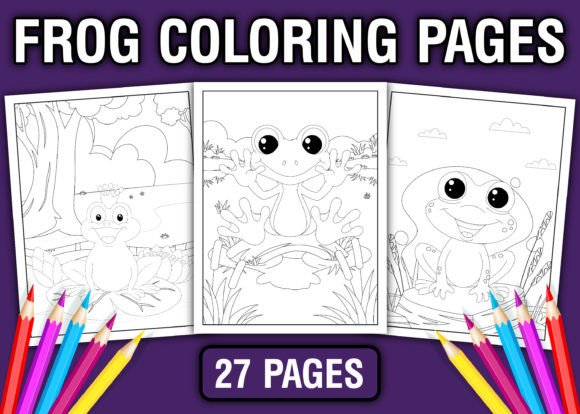
The product itself is straightforward: a 27-page digital printable bundle featuring frog-themed coloring pages, sized at 8.5″ x 11″ and provided in AI, EPS, PDF, JPG, and PNG formats. Each format is print-ready, which means you can take the files and immediately start building a physical or digital product. The inclusion of both vector and raster formats gives you flexibility—use the AI or EPS files to make edits, and the PDF or JPG files for quick uploads to print-on-demand platforms.
For someone running a high-content book business on Amazon KDP, this bundle removes the heavy lifting of illustration creation. You do not need to hire a designer or spend hours drawing. Instead, you receive a polished interior that you can integrate into a unique book cover, adjust layouts, and publish under your own brand. The strategic value here is time compression: what might take weeks to produce from scratch becomes a week-long or even weekend project.
Beyond publishing, the bundle works as a standalone educational tool. Teachers and parents can print individual pages for classroom use, rainy day activities, or frog-themed unit studies. The same files can be reformatted into smaller booklets, used in therapy settings for fine motor skill development, or even repurposed as party favors for a frog-themed birthday. The versatility is built in—you just need to decide which use case aligns with your current objectives.
Aligning the Coloring Book with Broader Goals
Any resource is only as valuable as the goal it serves. The Frog Coloring Book for Kids supports several distinct types of goals, and clarifying which one matters most to you will determine how you deploy it.
If your primary goal is revenue generation within a KDP business, the bundle gives you a ready-made interior for a low-content or medium-content book. You can pair it with a strong cover, write a brief description that targets parents searching for frog-themed activities, and price it competitively. The risk is low because the interior is already production-ready, and your main investment is time in formatting and marketing. Over time, multiple such books can create a passive income stream if they rank well.
If your goal is educational impact, the coloring book becomes a tool for engagement. Coloring helps young children develop pencil grip, hand-eye coordination, and color recognition. A themed set—frogs, in this case—can also spark curiosity about nature, life cycles, and habitats. You might supplement the pages with discussion questions or simple facts about frogs, turning a quiet activity into a mini science lesson. For homeschoolers and educators, this integration of creativity and learning is a practical way to cover multiple domains in one session.
For brand builders, the coloring book can serve as a lead magnet, a freebie for email list growth, or a bonus product that differentiates your shop from generic offerings. If you run a website about parenting, teaching, or nature crafts, offering a free download of a few frog pages can build trust and drive traffic. The strategic move is to use the bundle not as an end product, but as a gateway to a relationship with your audience.
When and How to Deploy This Resource Effectively
Timing and execution matter. The Frog Coloring Book for Kids is not a product you simply upload and forget. To get the best results, you need to match it to the right context.
For KDP publishing, the ideal time to release a themed coloring book is before the season or event when demand peaks. Frog themes work well for spring and early summer, when children are more likely to encounter frogs outdoors. They also tie into units on pond life, amphibians, or metamorphosis, which are common in preschool and early elementary curricula. Publishing a few weeks ahead of these windows gives your book time to gain initial reviews and organic ranking.
If you are a teacher or parent, the best time to print pages is when you already have a frog-related activity planned. Instead of searching the internet at the last minute, you can have the full set ready in a folder, print the pages you need, and even reprint favorites that get heavy use. The variety of 27 pages means you can select simpler outlines for younger children and more detailed ones for older kids, adapting in real time.
Approach the deployment in stages. First, open the files and review the quality. Check that the lines are clean, the images are well-proportioned, and the formats render correctly on your end. If you plan to customize, use the AI or EPS files to add your own branding, adjust the page order, or insert blank pages for double-sided printing. Then test-print a few pages to see how they look on standard paper. Small adjustments at this stage prevent larger problems later.
Strategic Considerations Before You Publish or Distribute
Rushing to publish or distribute without forethought can undermine even a well-designed product. The Frog Coloring Book for Kids is robust, but your strategy determines whether it succeeds or sits unnoticed.
One key consideration is audience targeting. A coloring book for kids sounds broad, but the most successful KDP books target a specific age range and interest. Are you aiming at toddlers who need large, simple shapes? Or older children who can handle finer details and perhaps want realistic frog illustrations? The bundle likely includes a mix, but you can curate the pages to fit your specific niche. If your book is for ages 2–4, remove pages with very small elements. If it is for ages 5–8, emphasize the more intricate designs. This curation takes minimal time but significantly improves the user experience.
Another factor is differentiation. There are many frog coloring books on Amazon. What makes yours stand out? It could be the cover design, the title, the number of pages, or a bonus like a fact sheet or a frog life cycle diagram that you create yourself. The base interior is a starting point; your unique value comes from how you package, present, and market it. Consider writing a description that speaks directly to a parent who wants both fun and learning. Offer a preview that shows the quality of the line art. Use keywords naturally, but focus on the benefit to the buyer.
Licensing and usage rights also deserve attention. When you purchase a digital printable bundle like this one, you typically receive a commercial license that allows you to sell the finished product on platforms like KDP. However, you should verify the specific terms. Some bundles require you to add original content or modify the pages. Others allow direct use within a book interior. Understanding these rules upfront protects your business from policy violations and ensures you are operating within the boundaries of the license.
Practical Examples and Planning Tips
To make this concrete, consider two realistic scenarios.
Scenario A: The KDP Publisher
Sarah runs a small publishing business focused on children’s activity books. She downloads the Frog Coloring Book for Kids, opens the AI file, and adds her logo and a footer on each page. She removes five pages that she feels are too similar, leaving 22 pages. She designs a cover featuring a bright green frog on a lily pad, titles it “Leap into Color: A Frog Coloring Book for Kids Ages 4-8,” and writes a description emphasizing creativity and screen-free fun. She uploads the interior PDF and cover to KDP, sets the price at $6.99, and runs a free promotion for the first five days to generate reviews. Within two months, the book is selling steadily alongside her other titles.
Scenario B: The Homeschooling Parent
Mike is homeschooling his two children, ages 3 and 6. He prints the entire set of 27 pages and places them in a three-ring binder with clear sheet protectors. He lets his younger child use washable markers on the simpler pages, while his older child uses colored pencils on the more detailed ones. He pairs the activity with a YouTube video about frog metamorphosis and a visit to a local pond. The coloring book pages become part of a broader learning experience, and he reprints the favorites multiple times. The cost is minimal, and the engagement is high.
From a planning perspective, the smartest approach is to batch your efforts. If you are publishing on KDP, create multiple coloring books in a series—frogs, turtles, butterflies, fish—using similar formatting and branding. This builds a cohesive catalog and increases the chances that customers who buy one will return for others. If you are using the pages for education, organize them into themed folders so you can quickly access the right content when a topic arises naturally in your schedule.
Long-Term Value and Iterative Improvement
The Frog Coloring Book for Kids is not a one-time asset. Its long-term value depends on how you build around it. For publishers, customer feedback on your frog book can inform your next release. Did parents want more variety? More educational elements? Larger pages? Use reviews and questions to refine your approach. Over time, you can release a second edition or a companion book with frog dot-to-dot pages, mazes, or word searches, leveraging the same theme and audience.
For educators and parents, the digital format means you can reuse the pages year after year. Print them on cardstock for durability, or laminate a few for repeated use with dry-erase markers. As your child grows, the same pages may shift from a simple coloring exercise to a reference for drawing practice or a template for frog-themed art projects. The resource scales with the child’s development if you think ahead.
On the business side, a single bundle like this can generate indirect value through cross-promotion. Include a call-to-action at the end of the book—a link to your website, a discount code for another title, or an invitation to join your email list. Even a small conversion rate compounds over hundreds or thousands of sales. The coloring book becomes a touchpoint that leads to deeper engagement.
Avoiding Common Pitfalls with Digital Printable Books
No product is foolproof. One common mistake is treating the bundle as a finished masterpiece without any customization. If you upload the exact same interior that hundreds of other buyers also use, your book will look generic and compete mainly on price. Add your own touches—a unique title page, a back page with your brand, a different page order, or a small original illustration if you have the skill. Small differentiators compound into a distinct product.
Another pitfall is neglecting print quality. Always test-print a few pages on your home printer or a local print shop to see how the lines render. Some files may appear crisp on screen but lose detail in print. Adjust the PDF settings if needed, and choose paper weight that suits the medium. A flimsy page that shows marker bleed-through will frustrate kids and reflect poorly on your book.
Finally, avoid overloading the market without a positioning strategy. A single frog coloring book is viable. But if you publish ten similar frog books in one month without clear differences between them, you dilute your own catalog and confuse customers. Instead, diversify your themes or depth levels—one book for toddlers, one for older kids, one with educational extras—so each has a clear place in your portfolio.
In the end, the Frog Coloring Book for Kids is a tool. Its value depends entirely on the thought you put into its use. Whether you are building a business, enriching a classroom, or creating quiet moments at home, the right strategic approach turns a simple set of pages into a lasting resource. The files are ready. The opportunity is yours to shape. Download, plan, and proceed with intention.