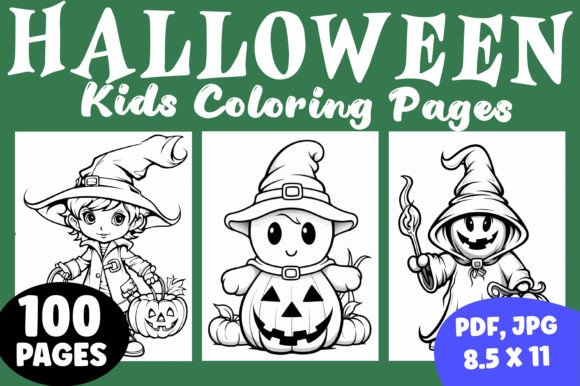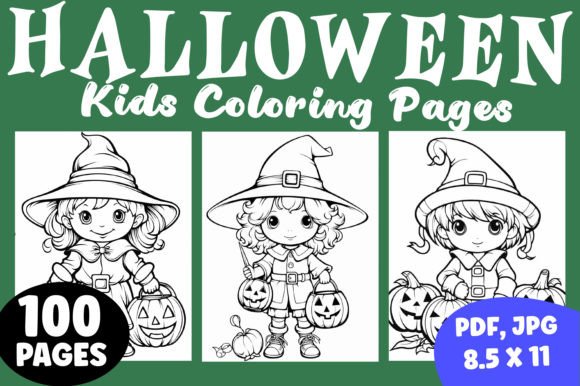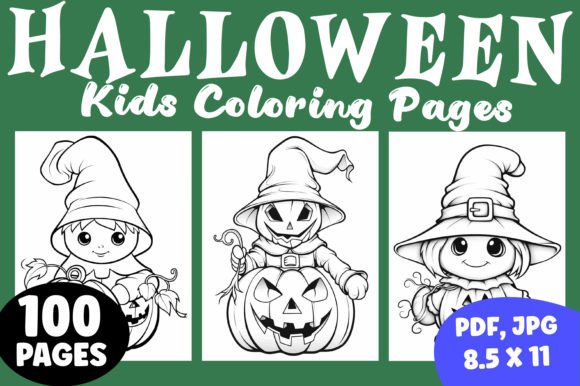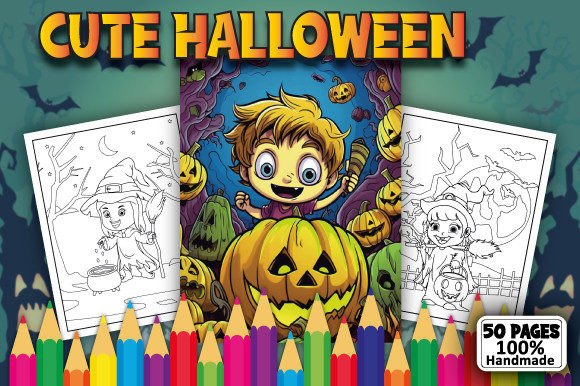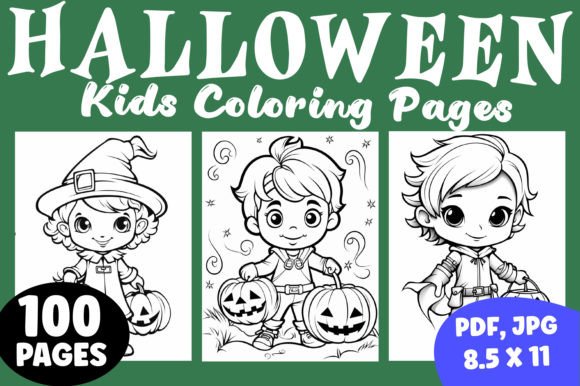
100 Cute Halloween Coloring Pages Vol 04: What You Should Know Before You Buy or Create
If you have been searching for Halloween-themed coloring content, you have likely encountered 100 Cute Halloween Coloring Pages Vol 04. This collection offers a complete package with PNG, JPG, PDF, EPS, and AI files in a standard 8.5″ x 11″ format totaling 100 pages. While that sounds straightforward, there is a surprising amount of confusion around how to use such a product effectively, especially if you are working within the Kindle Direct Publishing ecosystem or creating resources for children, classrooms, or small business clients.
Many well-intentioned buyers and creators end up frustrated not because the product itself is lacking, but because they misunderstand what they are actually getting and how to apply it. This article walks through the most common missteps and shows you how to avoid them.
Mistake 1: Treating the Files as Ready-to-Print Books Without Reviewing the Layout
One of the most frequent misunderstandings is the assumption that the included PDF, JPG, or PNG files are already formatted as a finished coloring book ready to upload to Amazon or another platform. While the files are print-ready in the sense that each page is a clean, high-resolution image, 100 Cute Halloween Coloring Pages Vol 04 typically comes as a set of individual page files. You are getting the raw material, not necessarily a pre-assembled book with cover, bleed margins, and table of contents.
This matters because KDP requires specific formatting for print books. The interior file needs to have proper bleed (usually 0.125 inches on each side), page numbers if desired, and a cover file that matches the exact spine width calculated from your page count. If you upload the pages as-is without adjusting for these specifications, Amazon may reject your file or the printed book may appear off-center.
What to do instead: Open the PDF in a program like Adobe Acrobat Pro, Canva, or Affinity Publisher and check the page size. If the pages are exactly 8.5″ x 11″ with no bleed area, you will need to add bleed yourself or use software that can expand the canvas slightly. Alternatively, if you are printing at home or using a local print shop, the standard size works perfectly without modification.
Mistake 2: Overlooking the Difference Between CMYK and RGB Color Modes
Another subtle but impactful detail involves color mode. Many digital files, especially PNG and JPG images, default to RGB color space because that is what screens use. However, commercial printing presses use CMYK. If you upload an RGB file to KDP or send it to a printer, the colors can shift noticeably. Blacks may appear muddy or slightly tinted, and the crispness of line art can be reduced.
This is particularly relevant for 100 Cute Halloween Coloring Pages Vol 04 because the collection is designed to be black and white line art for coloring. You want those lines to remain sharp and dark, not faded or misregistered after printing.
Practical advice: Before finalizing your file, convert it to CMYK using your editing software. Most professional tools allow you to do this in seconds. If you are using the EPS or AI files, those vector formats give you the most control over color accuracy. For print-on-demand through KDP, Amazon actually prefers RGB for its own internal conversion process, but if you are going through a local printer, stick with CMYK. Check the specific requirements of your printing platform to avoid guesswork.
Mistake 3: Ignoring the Target Age Group When Choosing Pages
The title says "cute" Halloween, which implies a softer, more whimsical aesthetic rather than scary or gruesome imagery. However, within a set of 100 pages, there is often variation in complexity. Some pages may feature simple outlines of pumpkins and cats suitable for young children, while others might include more detailed scenes with multiple elements better suited for older kids or even adults.
Creators sometimes make the mistake of assuming that because the style is cute, every page works for every age. If you are assembling a book for toddlers, a page with tiny bats, intricate spider webs, or small background details can be frustrating for little hands to color. Conversely, if you are marketing to adults or older children, pages that are too simple may feel unchallenging.
Better approach: Look through the entire set and sort pages by complexity. Many creative entrepreneurs use a simple tiered system: easy (large open spaces, few details), medium (some background elements, moderate line work), and detailed (intricate patterns, small objects). You can then create multiple books or activity packs targeted at specific age groups, or include a mix within one book and clearly label the recommended age range on your product listing.
Mistake 4: Assuming the Word Search Element Is a Standard Puzzle
The product description mentions "Halloween word search" and "shaped Halloween word search" as part of the tags. This is an interesting hybrid element, but it is easy to misunderstand what you are getting. Shaped word searches are not always rectangular grids. They can be designed inside the outline of a pumpkin, a bat, or a haunted house, which adds visual appeal but can also make the puzzle harder to solve, especially for young children who are still developing spatial reasoning.
If you are using this product to create an activity book, the word search pages may require different instructions or a separate answer key. Some buyers expect all 100 pages to be standard coloring pages, so the inclusion of word search puzzles could either be a pleasant bonus or a point of confusion depending on how you present it.
What to check: Open the PDF and locate the word search pages. Verify whether they include answer keys or if you need to create them yourself. Decide whether you want to include these puzzles in your coloring book or use them as a separate activity section. If you are selling on KDP, make sure your product description clearly communicates that the book contains both coloring pages and word search activities so customers know exactly what they are purchasing.
Mistake 5: Overlooking Print Bleed and Margins When Using the PDF or PNG Files
Even if you understand bleed conceptually, it is easy to overlook how much margin the individual pages actually have. Some files in 100 Cute Halloween Coloring Pages Vol 04 may have the artwork centered with generous white space, while others might have elements extending closer to the edge. If you try to print these on a home printer or a standard office printer, many models cannot print right to the edge of the paper. They leave a quarter-inch to half-inch unprinted border.
The result is that artwork near the edge gets clipped. For coloring pages, this usually means part of a bat wing, a cat tail, or a border design gets cut off. This is not a flaw in the product itself, but a mismatch between the file design and your printer capabilities.
How to handle it: Before printing the entire set, print one test page. Check whether any important line art falls within the non-printable zone. If it does, you can either scale the image down slightly in your print settings (usually 95% to 97% works well) or use software to reposition the artwork. For professional printing, always request a proof copy before committing to a full print run.
Mistake 6: Not Leveraging the AI and EPS Vector Files
One of the strongest selling points of this collection is that it includes AI and EPS vector files. Many buyers, especially beginners, stick with the PDF or PNG versions because they are more familiar. This is a missed opportunity. Vector files are infinitely scalable without losing quality. You can take a single bat or cat illustration from the set and resize it for a book cover, a poster, a banner, or even a sticker sheet without any pixelation.
Additionally, vector files allow you to edit individual elements easily. Want to change the outline thickness to make it more suitable for young children? You can do that in Adobe Illustrator or Inkscape. Want to combine several small illustrations onto one page to create a collage-style coloring page? Vector format makes that simple.
Recommendation: If you have access to vector editing software, open the AI or EPS files and explore. You will often find that the artwork is organized in layers, which gives you tremendous flexibility. Even if you are not a designer, learning basic vector manipulation can dramatically expand how you use this single purchase.
Mistake 7: Forgetting to Test File Compatibility Across Devices and Software
AI files require Adobe Illustrator or compatible alternatives. EPS files can be opened in many programs but sometimes import with unexpected results. PNG and JPG files are universal, but their resolution matters. The collection specifies print-ready files, but 300 DPI is the standard for quality print. All files should be checked to ensure they meet that threshold.
If you plan to use these files on a tablet or phone for digital coloring, JPG and PNG work fine. However, if you are editing on a Windows machine and then sending to a Mac for final layout, file compatibility issues can arise, especially with fonts or linked images inside the vector files.
Practical step: Open each file format on the device and software you intend to use before you need it urgently. This takes five minutes and can save hours of troubleshooting later. If you are collaborating with a designer or printer, confirm which format they prefer. Most commercial printers are happy with high-resolution PDF, but some may request the AI file for advanced adjustments.
Mistake 8: Misjudging the Scope of a 100-Page Collection
One hundred pages sounds like a lot, and it is. But when you are creating a coloring book for sale, you need to consider that KDP charges printing costs based on page count. A 100-page black and white interior on standard white paper has a certain cost, and you need to price your book accordingly to maintain a reasonable royalty. Some creators inadvertently price their book too low, eating into profit, or too high, deterring buyers.
Also, 100 pages of content means you have the material for multiple smaller books. You could split the collection into three or four themed volumes (e.g., "Halloween Cats," "Spooky Houses," "Bat Friends") and sell them individually or as a bundle. This approach often increases overall revenue compared to publishing one large book.
Strategic advice: Calculate your printing cost using the KDP pricing calculator before you set your price. Consider whether a 100-page book or a smaller 40-page book would better serve your target audience. Many parents prefer shorter activity books for young children because they are less overwhelming and easier to carry in a bag. You can always publish multiple volumes from the same master set.
Mistake 9: Neglecting to Review Licensing and Usage Rights
This point is overlooked more often than you would expect. Even though you have purchased 100 Cute Halloween Coloring Pages Vol 04, the license may restrict how you can use the files. Some collections are sold for personal use only, meaning you cannot sell the printed books or use the artwork in commercial products. Others come with a commercial license that allows you to create and sell coloring books, activity books, or digital products.
Violating the license terms can result in your KDP account being suspended or legal action from the copyright holder. The description tags mention KDP, KDP Interior, and KDP Coloring Book, which strongly suggests that commercial use is permitted, but you should always confirm the specific license details from the seller.
What to verify: Read the product listing carefully. Look for a license file in the download package. If the terms are unclear, contact the seller before using the artwork for any commercial project. Keep a copy of the license for your records. This simple step protects your business and your reputation.
Mistake 10: Skipping the Cover and Interior Design Polish
Having 100 beautiful coloring pages is only half the battle. The cover of your book is what convinces people to click and buy. Many creators spend all their energy on the interior pages and then throw together a generic cover. On Amazon, where customers cannot physically browse the book, the cover is your most important marketing asset.
Similarly, the interior layout matters. Even though the pages are print-ready, you should consider adding a title page, a copyright page, and perhaps a "This book belongs to" page at the beginning. These small additions make the product feel more professional and complete.
Better practice: Design a cover that reflects the cute, whimsical style of the interior. Use one of the illustrations from the set as the cover image, add your title in a clear, readable font, and include a subtitle that tells buyers exactly what they get. For the interior, keep the layout clean. Avoid placing page numbers too close to the artwork, and ensure that any text you add does not compete with the illustrations.
Mistake 11: Overcomplicating the Coloring Experience for End Users
The whole point of a coloring page is relaxation and enjoyment. If the finished book is difficult to open, the paper is too thin for markers, or the images are printed too faintly, the user experience suffers. When assembling your final product, choose paper quality carefully. 60 lb paper is standard for coloring books, but heavier paper (70 lb to 80 lb) is better for markers and reduces bleed-through.
Also, consider the binding. Coloring books that do not lie flat are frustrating. If you are using KDP, perfect binding is standard, but spiral binding is an option through other platforms and makes the book much easier to use.
Final check: Print a sample of several pages on the exact paper you plan to use. Test them with crayons, colored pencils, and markers. If the paper bleeds, consider adding a "Test your colors" note or including a blank page between illustrations. Small adjustments like these can turn a good product into a great one.
Understanding these common mistakes will save you time, money, and frustration whether you are buying 100 Cute Halloween Coloring Pages Vol 04 for personal enjoyment or using it as the foundation for a commercial project. The collection itself offers excellent value with multiple file formats and versatile artwork, but your success ultimately depends on how carefully you prepare and present it. Take the time to review the files, understand your printing options, and match the content to your audience. That attention to detail is what separates a forgettable product from one that customers love and recommend.